Fast Pre-Sale Fixes That Pay
 I sit down with Justin Fausch of VimV Real Estate to break down how to increase a home’s sale price with fast, low-risk pre-sale improvements instead of a risky full remodel or a discounted investor sale. We focus on probate, trust, and conservatorship situations where timelines, emotions, and disclosure rules can make or break the outcome.
• VimV’s niche model and why contractor licensing matters
• Why professionalism and process beat hype in real estate sales
• “Beautification” vs major rehab and how to pick the right projects
• Broker opinion of value that prioritizes ROI, cost, and time
• Managing family dynamics and stress in probate and trust sales
• When selling as-is makes sense and when it leaves money behind
• Market realities and the shrinking buyer pool in the mid-range
• Risk controls: inspections, disclosures, and avoiding major systems
• One do and one don’t for executors and trustees when deciding on work
Come ask. Ask us to give you an evaluation, compare it against everyone else and and see how you feel.
Glen Kangas
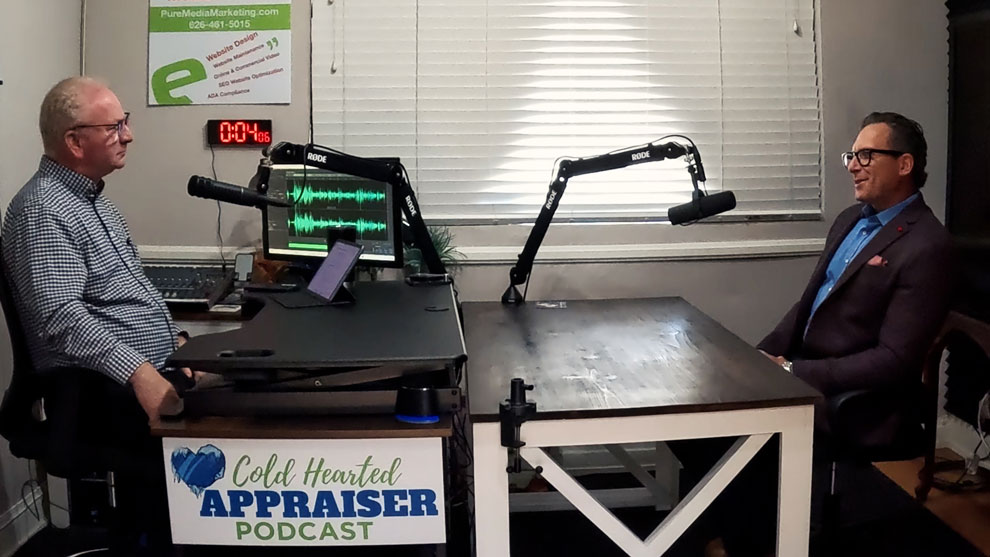
Welcome to the Cold Hearted Appraiser Podcast. Uh, my name is Glen Kangas. I’m the Cold Hearted Appraiser. Uh, and I’m just really excited today to have uh a unique and amazing uh guest on today, Justin Fautsch from Vimvi. Uh and their specialty is uh taking a uh property that needs a little work, uh giving it, freshen it up a little bit to increase the return uh on the sale to help uh benefit. Um and so, first of all, Justin, let’s just talk. Just give me an intro, talk nice about yourself, and uh, you know, tell me who you are and what you do.
Justin Fautsch
Sure. Well, then thanks for having me. Uh, you know, we’ve seen each other around, have watched you come on the scene and really kind of explode. You have got a good handle on marketing. So I appreciate you bringing me in. I’m Justin Fautsch. I’m one of the founders of Vimvi Real Estate. Uh, we launched eight years ago. Um, you know, and that the there are a couple major differences between us and every other brokerage that are that’s out there. I think the the first is that we have a contractor’s license affiliated with our or with our brokerage. So on the back of all of our marketing pieces, you’re gonna see our brokerage number. You’re also gonna see our contractor’s license. We’ll dive into what that means to the consumer or to the signer in in a bit. But uh, the second, I think that we have, you know, uh my business partner is an attorney with the tax specialty. He came out of a real estate fund, multifamily real estate fund. So the intricacies and complexities of that market, and particularly serving investors, uh, managing those emotions and those expectations is a unique thing uh in in the space. Then I think we’re a sales organization. And and what that means um is is and how we approach it is different than I think what other brokerages do. Uh, I come from the Fortune 200 medical device space, uh, was very successful there, started my own company headquartered in Chicago, and you know, sold at a very, very high-level, very technical sales um with life or death consequences with guys in in the operating room. And it was intense. It was really, really fun. I enjoyed it, and I think it prepared us perfectly for this business now.
Why Vimvi Is Different
Justin Fautsch
Okay.
Glen Kangas
Good deal, good deal. Um, so just let’s talk a little more about just the Vimvi model. Yeah. You know, what how does your background and your partner’s background kind of dealt, you know, make you guys good at this? And just tell me what what’s the purpose of your model? What’s the benefit of your model and how you do it at Vimvi?
Justin Fautsch
I think at the end of the day, our our mission is simple. Uh, that is to serve our client um in the most professional manner, bring the highest return, and do so with transparency and a lack of emotion. When we started, I really helped my partner uh transact on we we handled some transactions and I kind of jumped in and he always said, Listen, if you could bring your sales skill to what I know about the brokerage model, we’ll do really well. What I saw when I got into it is listen, there are on your podcast, they’re great professionals, right? I mean, you couldn’t, if you give a property to any one of us, you couldn’t go wrong.
Glen Kangas
Right.
Justin Fautsch
Uh, and we’re all professionally supportive of one another. We play well in the sandbox. Uh, at the same time, they would all agree with me that outside there’s a dearth of professionalism just in general in the profession. And that’s for a multitude of reasons, one of which I support. It’s easy to become a root alter. It’s one of the easiest professions that you can begin with a very small amount of money, uh, and a very high degree of enthusiasm. And, you know, find some low-hanging fruit, get some transactions under your belt, and really build a business. So I, although I am supportive of that business structure and people being able to get into the business, I’m unsupportive of the continuing education and or professional requirements uh needed to maintain a license. So, you know, I think what that has to do is there’s a there’s a thing happening, right, in in the brokerage world. One is, you know, from REMAX to, and I’m not saying anything about any one person at these brokerages. I’m just saying things are changing. But from REMAX to Century 21 to the compass model to equity union, right? That there seems to be more of a personal touch or a more a larger focus going on what type of tools do we give to our agents? How do we help them develop more professionally, right? And I think the first one that really helped that change was Keller Williams, right? Keller Williams gave that red book out. If anybody’s watching this, you should and you’re a realtor, you should definitely read that book. Um and it and it very simply does what I was taught at my very first sales job. What are you doing on a daily basis? How many calls are you making? How are you following up? I mean, the nuts and bolts of this, right? And I think that these other brokerages then came in and said, Hey, that’s not really enough. You know, we need to put some tech behind this, you need we need to market behind this. So to take that even further, now I think what you’re getting is very niched out specialty agents or brokerages that hone in on one thing that they can do the best, and not just be listen, I’m good, but I’m the best at this portion. Uh and that’s what Vimvi’s done.
Professionalism And Brokerage Trends
Justin Fautsch
Uh, we sell as is all the time, but we have become the masters of it there are multiple attorneys, multiple professionals, a fiduciary. Um, those professionals tend to like to deal with us because we know how to treat it as a business transaction. Um remain unemotional, respond at the appropriate time with the right paperwork, with the right language that everyone needs just to chug along. Right. And the rehab portion or the construction portion is really our is the niche within the niche. Um we use it probably 50 or 60 percent of the time. And it’s really quite simple. Properties that are maintained or look more appealing sell for more. And that’s not a Vimvi thing. You see that across agents, every agent in this room probably, you know, stages, probably paints, probably does all that stuff. Right. Where the Vimvi niche comes in is that we are licensed bonded insured workers comp, all of our people that are doing this work don’t introduce any risk into the transaction. And I can’t stress that enough. Yeah, it’s a huge deal. Anytime you outsource, you’re introducing risk. And at a time where things are already messy and stressful and emotions are high, and you have two attorneys going at it, right? Introducing any more might be this might be the straw that breaks the camel’s back. And that is something that is intolerable for everyone. And that’s where we came in, and that’s where we really show it.
The Licensed Contractor Advantage
Glen Kangas
So from a valuation standpoint, what are you trying to achieve with your model with your analysis?
Justin Fautsch
So let’s go to when we do an analysis, when we work with you, uh I want my I think that we run numbers a little differently. Uh, our broker opinion of values, I don’t give you 82 pages of gobbledygook or 120 pages showing you where the the closest Taco Bell is, it drives me crazy. Yeah. Um, no one cares about that. What they care is listen, if I buy this thing, where do I stand with the repairs and and how much I’m gonna get back? Right. So we want to get maximum return with minimum spend on minimum time. That’s what we do. So from the time someone signs a contract with us, 14 to 21 days and we’re done and up on market. So I’ll say that again 14 to 21 days till we’re up on market. That’s fast. Up on market, two weeks, you know, two weeks, a week for counters to go back and forth, uh, and close in 30 days. When you’re talking it, we work quick. Time, everyone will tell you, time on market is is no one’s friend. Right. And particularly at the level that we play at. So we do a lot of luxury stuff, but we never use that word. It’s not what we do. Um, because every asset that gets under our care gets the same treatment. We sold $10 million houses, five, four. Uh we got a nine million dollar multifamily right now. But everything is treated the same. We have a $400,000 house up in Arrowhead right now, right? Which is we can talk about that. Yeah, you know, but that’s an interesting situation up there because I think the market is is changing. Then materials, the cost of materials, right? So we buy materials in bulk. So our our costs are much lower. And talk about materials right now with a contractor. Everything is crazy. Uh, the current administration prices have shot up, and that’s a non-political statement. They shot up for whatever reason. Also, labor underneath a contractor, there aren’t as many people available to do this work as there were a year or two prior. Right. So now labor is being done by more experienced professionals, and that’s gone up. Right. Our prices have pretty much maintained because we’re able to do that. Nothing’s really changed with our organization.
Fast ROI Valuation Strategy
Justin Fautsch
So you ask me, what is my goal? The goal ultimately is to provide a service that is very emotional. So when you talk about contracting with an administrator of a probate that has four brothers and sisters, yeah. Okay, they might be gung-ho on it. One of their siblings might not be. And that that sibling is going to be the squeaky wheel that ultimately might not get any grease and it might start screaming. So you got to work fast because this administrator is under stress. Right. You also have to make sure that everything works. So we talked about time and that’s how we control that. We talked about cost, but then it’s the sales skill. It’s how am I relaying the plan to everyone else? How do I help with that maybe problematic sibling uh and and corral that emotion and get them on board? I mean, it’s a challenging thing, right? Uh, so the communication piece. But ultimately, what we want to do is make sure that we are making enough money on the return of investment, right? Uh, our whoever signs up for this, if we believe in the project, we’ll bring the capital. Right. Right. So we bring the capital. That’s you you can’t have someone that you can’t ask that administrator to pay that cost when there are other siblings that just won’t do it. Yeah. Right. Absolutely. So we bring the capital, and then if we’re using our capital, we want to get it back. So you have this is why you tell everyone is you have two wonderful checks and balances in this that are totally independent of me. One, I’m here pitching you today, not just say you were a client. I’m here pitching you because we did a good job on the last one. Right. And the one before that. And the one before that. It’s a chain. Everyone else that’s been on your show will tell you that you can you this isn’t a profession where you can make no errors at that level. You can, you can, everybody makes mistakes. But at the end of the day, if you don’t get the return, and if you have a beneficiary that’s upset, you’re done. Right. Right. So just like in the OR, you know, you can you can have errors. You might not have the right thing that the surgeon wants, but you have something that works, uh, that that also will provide the the patient therapeutic benefit. Same thing here. Same thing here. Is at the end of the day, it’s the outcome by which we’re all judged, right? Right. Luckily, we have done hundreds of these in the past couple of years, and we have never missed a timeline on our BOV, on our broker opinion of value, when we say, hey, this is as is value, which we don’t uh make artificially low. Uh after these returns costing this much that are put out by line item, not like, hey, your kitchen, this room, yes. Uh this is the return. We’ve never not exceeded a return. So, with those three things, we are the safest place to do this type of work, you know. And I’m passionate about that. Yeah, well, there’s as the boomers age, you know, my parents’ generation, you know, I see a lot of success in this sort of middle America, California, right, you know, and a lot of wealth was built there. You know, and talking to my wealth manager friends, you know, it’s not someone we’re looking for a lot more than what we can bring. But I’m saying, you know, someone that’s retired with a house that’s paid off, a vacation home, million bucks in a in a in an investment account, 600,000 in a cash account somewhere. That’s that’s what we do from San Diego to Santa Barbara, uh Palm Springs to the beach. Right.
Probate Stress And Funding Repairs
Glen Kangas
So and you do uh single families and you do apartments, how big of an apartment do you guys do?
Justin Fautsch
Up to so yeah, that’s a great question. So I would say the only things we don’t do are larger commercial properties. I’m not your guy for that yet. But I will but I will say, like honestly, we’re not we’re not that’s not where our experience is. You know, I’d say 12 units and under is what we’ve done, but we have, you know, 25. I have one coming up with 36.
Glen Kangas
Right.
Justin Fautsch
So, and those are with attorneys and fiduciaries that we’ve worked with. They’re in good hands. These are assets. We’ve we’ve done 20, we’ve done 22, but the bulk is 12 and under, you know.
Glen Kangas
And what do you on apartment buildings? What do you look to do to improve the value? Because the two things that improve value the most on apartment are increased income and lower expenses, period. Right. Well, so what is what you do, how does that benefit or or help in those areas?
Justin Fautsch
I think this is a good general discussion of I and I’d like to clear the air that there’s I I just went to PFAC. We’re a big sponsor of PFAC. So the first year I went to PFAC, I thought we were gonna knock it out of the park. So I thought it was gonna be really exciting. And I will tell you, there was a lot of pushback against our model, despite one of my largest competitors who I like very much, uh being having been there for a long time. And what I didn’t know is out in the space, there were a couple people that had gotten in trouble for using their brother as the contractor, using their husband, having a direct relation and a direct benefit from this work. So, what I always say is like, let’s not be idiots, right? Of course, you have to have be at arm’s length. For example, I don’t own an escrow company. I don’t, I don’t get a title, I don’t own a title company. I get no remuneration from working with you or anybody else. Uh my relationships are built on the sanctity uh and financial responsibility of like, hey, these guys just do a great job. So going back, it we weren’t well received only because of the contracting piece. But what I I want to say is it’s on a case-by-case basis. And there are homes that are too far gone, there are our buildings that are too far gone. I would tell you, we’ve dealt with a couple in REAP. REAP is a really, really terrible, awful thing.
Glen Kangas
Tell us briefly about REAP is and it’s City of LA, correct?
Justin Fautsch
Yeah. So uh colloquially, REAP is when you have an absentee landlord or a landlord that uh has not taken it’s an uninhabitable situation. Okay. To the point that uh LA County says, hey, you know, enough’s enough. We’re gonna control all the rents until you do these repairs. And if you’ve ever visually seen these things up close, I mean you understand why these protections exist. Right. Yeah. Uh these this is these are bad situations. It’s a terrible thing. People should not be living in these conditions. Uh, but it becomes a very, very extensive, expensive, crazy um thing to have to fix. And on the open market, you very rarely are gonna get that owner to agree to either a relocate everybody that’s in there so that you can do the repairs, then offer that back at the existing rents. I mean, it’s yeah, it’s untenable. And then to sell it a discount to make it work, they’re also not typically agreeable to that either.
Glen Kangas
Right. So those are definitely not ideal candidates.
Justin Fautsch
It’s too far gone.
Glen Kangas
Right, too far gone. So your model really is specific to homes that are tired, but not fixers, broken stuff. Yeah, yeah.
Justin Fautsch
Good bones, good bones, solid bones, healthy bones, right? Yeah, a little sunbeaten, okay, some termite work, some beautification. Construction is a big word, it’s a heavy term for enslavement.
Glen Kangas
Yeah, for sure.
Justin Fautsch
Beautification is much more what we do, right? And really, it’s all about and systems. So you look at major systems, right? Like if you have a hundred amp panel, right? We’re not touching a hundred amp panel. Roof. We don’t, you know, screw in uh yeah, right, knob and tube, and you know, all this stuff. We just those are not things that we do, right? Uh roof, listen, it we used to get roofing con now, get a roofing contractor on time right now. Very hard. Good luck.
Glen Kangas
Yeah.
Justin Fautsch
So I’d rather negotiate on those things, right? Now, at the same time, if it’s safe, if you haven’t had a problem with the 100 amp panel in a hundred years or whatever, uh and the roof isn’t linking, then why not make the inside pretty so that someone can move in and over time with what cash they have available, they can fix those things.
Glen Kangas
Right.
Justin Fautsch
Right. So, um, and if we can’t, then we have a conversation and it’s not a good candidate, and it’s much better to sell as is.
Glen Kangas
Right. So, in your scenario, what I’m what I’m picturing is say the market goes from $600,000 for a total fixer to a million for a place that’s been just gutted and is really nice. The $600,000 one is not your ideal candidate. The $700,000 one that’s got good bones but doesn’t need major work, and you’re not gonna take it to a million dollars. You’re gonna take it, you’re gonna put something into it and get it to if instead of $700, it’s gonna go for $800, $850, whatever.
Justin Fautsch
A little over nine.
Glen Kangas
Nine. So you’re gonna do to push it from that range. You’re not gonna triple anybody’s money. We’re not gonna make promises like that. Um, so you’re just finding that sweet spot where you can do it quickly and make a great return on the money, like you talked about.
Justin Fautsch
You’re exactly right. And and that’s uh most of real estate, as you know, from your business and why you’re so important to what I do, uh, is to help keep reality uh within grasp for these sellers. Right. You know, we talking about my parents’ generation, most of them made their wealth in real estate. Yes, you hear stories all the time. I bought this thing for 75,000 in Newport Beach, and now it’s worth 3.8, you know, and it hasn’t been touched since they bought it for 75,000. Or even you know, here in Monrovia, right? I bought this for 150,000 and it it’s now worth 2.2.
Picking The Right Property
Justin Fautsch
You know, this massive increase in real estate values, they think a lot of people think that it’s just going to keep going. And listen, we have a there are there are great supporting elements. We have a lack of inventory that keeps us very healthy, keeps us all in business. You know, at the same time, we’re not seeing the pace of wages increase at the same time. Same rate that that real estate has increased, right? So what I tell everyone now is you really have to pay attention to the the buyer pool. Who are you dealing with? Uh and this is what I will tell you the wealthy are getting wealthier. So nice things are great. People that are selling five and six million dollar houses by the beach, more power to you. They’re gonna go all well, you have a four million dollar place in Newport, and it’s like gangbusters, it hasn’t even hit right. But if you’re shopping at like 1.3 or 4 or 5, you got to think who is gonna be buying that. Do they have the money to buy that?
Glen Kangas
Right.
Justin Fautsch
And are their parents gonna release some funds to help them with that? You know, are their businesses healthy enough to support the the price of a monthly mortgage with new fire insurance? Right? HOAs, condos, hoas are going crazy.
Glen Kangas
Yeah, they’re going nuts right now.
Justin Fautsch
So I I do think that we’re we from my seal of pens evaluation, buyers are harder to come by now. We’re still selling everybody’s still selling for ISM best. If anyone told you that they weren’t white knuckling it a little bit right now, uh I believe they’d be lying. You know, we have some that fly, we have some that are really challenging.
Glen Kangas
It’s a very inconsistent market. Yeah. And it’s the number of buyers is definitely down. It’s down 40% of a standard market. Yeah, and we’re not even talking about versus a hot market, just a standard market. So we’re definitely seeing a drop there. Let’s talk about you got a specific case in mind, one of your ideal, your ideal ones you’ve done recently. Tell me about what it was, what you did, what was the return.
Justin Fautsch
Yeah, yeah. Walk through the process. I don’t know why, but we’ve been getting a bunch of uh bunch of conservatorship cases lately. Um, and you know, when people need care, uh, it’s outrageously expensive. I mean, if you yeah, once you dive into this, you think having a million bucks, we talked about that million dollars of middle man, you’re burnt through that in two years at today’s prices if you need the memory care and that sort of thing at the end of your life. Uh so every dollar counts, you know. And I I’m very satisfied when we are thanked for the work that we do. And I I a number of cases come to mind, but uh you know, we do a lot in that sort of Sat by Torrance Carson area, and they’re all kind of very similar. Uh and with a little beautiful, the bones are good, they were built well, right? They were taken care of, even though there was a decline uh in someone’s mental capacity and ability. Uh, and they were surrounded by people that were at least paying attention enough that the home didn’t fall off a cliff. So, in those cases, it’s great work. It it just hits like the funny bone of working perfectly. That $200,000 plus return after cost, that 14 to 21 days. And that person gets without that, it would be, you know, you’re you’re you’re giving them a bit more of a cushion. And the money, the profit goes back to our customer, right? It doesn’t go to us. I hate, I tell everyone, and I’ll tell you, if if you’re talking about to just get getting rid of it to an investor or flipper at this point, pause, take a beat. There are options. And I will tell you the only, and you know this, the only investors and flippers left in the market are sharp, shrewd, and they’ve been through these downturns.
Glen Kangas
Right.
Justin Fautsch
And they know the two, you know, it used to be five years ago, uh, you know, people watch Property Brothers and decide, you know what, I’m gonna do this with my two buddies, yeah, or with my wife, or with my, you know, and it just those that the the stupid money in the market is oh, the stupid money in the market is just gone, right? Right. So until that returns, people I used to say, listen, if if you have a property, an investor, they want to make 200 grand. That’s give or take. They’re gonna need 100 grand to flip it plus time cost of money, right? Say another 80 grand. So they’re really looking for 350 plus in the deal. Right. So if you’re like, oh, we’ll just get rid of it to an investor. Well, if you’re a million bucks, you’re gonna get rid of it at 650. Yeah, right, give or take in today’s market. Yeah, I used to, everybody used to be able to push that pretty high because they were enthusiastic. Also, the return was there. People, but it’s that’s gone right now.
Glen Kangas
Yeah, because the market when it was appreciating, it covered up a lot of stupidity and overpaying in the first place. So I remember for many years and in many different times when the market was appreciating. I remember investors being saved by the market. Yeah. Uh, I used to appraise properties. Somebody would buy a property in Arcadia and they weren’t buying like you know, normal, they were buying to protect their money. Yeah. They would overpay, and a year later, they’d be in the, you know, in the black because the market went up and protected him. And they didn’t care. But yeah, um, and you see the flips too, where you’re like, there’s no way they made money on that. Yeah. Or they would have made money, but they did because the market saved them.
Justin Fautsch
We look at all of our early deals. You know, I get reports all the time and we track all the sales that we’ve done. And early on, we we sold a bunch to investors who clearly, I will tell you, overpaid. Yes. And almost all of them made money.
Glen Kangas
Yeah. Yeah. We see data where it you wonder, yeah, like, boy, that just when you look at that time frame. Yeah. They paid a lot of money for that house that needed a lot of work.
Justin Fautsch
Yeah.
Glen Kangas
But they were okay. Yeah.
Justin Fautsch
Yeah. COVID was a wild time.
Glen Kangas
Yeah.
Justin Fautsch
It’s a wild time in real estate.
Glen Kangas
Yeah. What are some of the uh the challenges you run into um just in your
Protecting Deals With Disclosure
Glen Kangas
discussions? You do sell them as is, so it’s not like everything has to fit into that model. Yeah, yeah. And you’re gonna look at it and see, hey, this doesn’t fit, let’s just sell it as is. But what are the challenges you run into uh in doing a flip? You’ve got disclosure issues that change, uh, markets might shift. Yeah. So what’s what’s a couple of things you’ve had with your experience in the past where it’s changed the way you do it or it’s added um just steps or precautions that you take to make sure you’re protecting your clients?
Justin Fautsch
I think that’s a great point. I think the first thing and the most global thing you have to look for is alignment. You know, and that’s that’s a sales skill that you get, uh, that you get from being battle tested, right? And if there isn’t alignment, then this is not something that you choose. Right. In our in my last business in that medical device business that I was talking about, we always talked about patient selection, right? You want success. So when as speaking in surgical terms, you’re not looking for massive comorbidities, right? You’re not looking for complications. Yeah, you know, you want to operate on a nice 36-year-old who goes for a run three miles a day and has the kale salad every night, you know? Yeah. And the same goes here, right? Uh, if I don’t have alignment, then I can’t take there, listen, there are risks involved in everything. Correct. Right. And we’re talking about black and white, and then we’re talking about the risks in the middle. And anytime that you’re buying a stock to investing money in a property, you are taking a risk, right? Now, what’s the issue? With a stock, you can buy a stock, and the risk is it can go to zero. Right. The risk here is are you protecting the trust or the probate estate? Are you protecting your partners? Are you the are you protecting the beneficiaries? Are you protecting yourself? And are you, to a certain degree, protecting the buyer’s agent, and his client? You want you want all of that to to work. Right. So who you go into escrow with is very important, right? But the protections we take, number one, is we don’t we don’t negotiate out a um an inspection. We want you to inspect. We there that it’s not something we’ve ever done. I want you at this price, I want you to know. I tell the buyer’s agent all the time, uh, we want a nice clean transaction. And at this and this this price point, I want you to know what you’re buying. Right. Right? So we’re gonna tighten that inspection up, but have a look. Have a look under the hood, make sure that you do all of your inspections, and then I want you to sign off and tell me that you’re good. Yes, right. That’s one major protection. The other is in the disclosure process, right? Everybody knows real estate is about disclosure, correct? Right. So, number one, don’t do anything that you don’t want to not freely disclose. Yes, right. So going back to systems, right? Like if you’re fixing a P trap, great, easy to disclose, simple paint, simple, right? All of those things. By the way, look at all the other things that we didn’t disclose, make sure you’re comfortable with that, right? And that’s it. Right. That’s really, it’s really, it’s not more complicated than that. It’s when people say, um, if you don’t know what’s under the house and you say that it’s something that it’s not, right? Being truthful, being honest. Um saying I don’t know is a wonderful thing too, right? I mean, in a lot of these, there’s there’s beautiful protections for the administrator of appropriate estate or the a trustee of a trust who’s never lived there, right? And that is they’ve never lived there. Correct. Right. And as my agent visual inspection says, I this is what I saw before we we did a work. This is the work we did. Here you go, right? So again, with those major systems and major complications, we want to make sure that we’re not touching those for the most part. Uh, we also try to get people to buy as is, on top of as is, we all know is it is not really a financially technical term. Yes. Or it, but it does show our intent. Correct. It’s it’s an intentional term. It means, hey, listen, this is our intent on this, which gives a bit more gravitas to everything else, right? Um in all of the work that we’ve done, we’ve never had an issue. To be honest with you, in my in my heart and in my in the heart of my business, we want to have happy buyers as much as we want happy sellers.
Glen Kangas
Sure.
Justin Fautsch
I think that, and this is what I say to people all the time you’ve presented an opportunity to you. I know I see most of these buyers, they couldn’t buy at 1.1, but they could buy at 800, right? Correct. And we present a beautiful, safe home that still needs work, right? There’s there’s still some work to be done. We’re we’re never saying that it’s it’s you know, we’re not buying KB homes here, but right, but right, you know, you can have your kids in there and and it’s safe, and you can save up enough money over the next couple of years to redo the bathroom, right? Or redo the kitchen, right? So we don’t do much of anything in the kitchen or the bathroom other than clean, right? And it’s all about just getting it to the I always use my wife as a board because that’s all I can really, that’s the only circumstance I know. But you want my wife to walk in and say, wow, this is really nice. Correct. We could, I could see putting our couch there, right? Putting the TV there, and watching a movie with the kids and and having a barbecue in the backyard. Oh, and you’ll make enough money to redo the kitchen next year, right? You know, that’s a much different sale than when my wife walks in and I say, and I’m the first one to talk, say, but listen, this is a great investment.
Glen Kangas
Yeah.
Justin Fautsch
That’s a totally different sale. Correct. If you don’t have people, partners in lockstep, uh, partners or friends or single individuals uh in lockstep with how this is going to play out, you’re hurting your top line potential return.
Glen Kangas
Right. So the way I’m picturing it, the way I see it, the two things that pop into my mind are number one, it’s the question that you often get as an appraiser is hey, what can I do to the house that’ll give me the biggest return? Right.
Justin Fautsch
And it’s like Is that a kitchen, Glen?
Glen Kangas
Right. So my answer is always the kitchen and the master suite. Yeah, that’s the biggest return. Yeah.
Justin Fautsch
Also the biggest expense.
Glen Kangas
And also the biggest expense. So in your case, the tweak on that is what’s going to give you the biggest return without the biggest expense, and that doesn’t do the things that take a long time that require engineering and permits and all that kind of stuff. And keep you safe. And keep you safe still.
Justin Fautsch
So you’re exactly right. Yeah. Is is that without doing that kitchen and cleaning it, like I always say, like five-star hotel clean.
Glen Kangas
Yeah, yeah.
Justin Fautsch
You know, and there are little things you can do, but we the other truth is that everybody has such particular taste.
Glen Kangas
Yes.
Justin Fautsch
That even if I redid it, half of them are going to redo it again. So why not save them that 50 grand that I need the that I would need to get returned to me?
Glen Kangas
Yeah.
Justin Fautsch
And let let you buy at a lower price so that you can save that money.
Glen Kangas
Yeah.
Justin Fautsch
Or not be in debt that money. Correct. You know, and that’s kind of the name of our game. And I’ll tell you, it’s it’s counterintuitive for a lot of people. Sure. You know, sure. It’s very counterintuitive compared to what people have been taught. Um, we’re very popular, PFEC, with fiduciaries now. It’s a very different story than around five years ago. But you know, we’ve had to work really hard on on changing that mindset, on getting people on board. And we have, you know, rabid advocates now. There are some of the biggest fiduciaries in in California. Uh, we’re very thankful to them. But it it took them stepping out and saying, all right, man, we’re gonna we’re gonna give it a chance. But you know, now it’s five years later.
Do And Don’t For Trustees
Glen Kangas
And so just Kimmy, what’s one do and one don’t for an executor or a trustee when they’re considering uh uh your program and what you’re doing? What’s the what’s one thing they really should do, and what’s one thing that they shouldn’t do?
Justin Fautsch
Yeah, they really shouldn’t do anything uh structurally, or or they shouldn’t do any rehab on their own. Really, they should they should pause, they should take a beat. Uh and I like being, I always say, uh, tell everyone, like, listen, your attorney or your fiduciary, talk to other people, right? And I’m not afraid of competition. My competition shouldn’t be afraid of competition either. And I don’t think they are. Um, make sure you’re doing your your due diligence, right? You’re gonna see a lot of different plans. Take a beat, right? You you’ve it’s been years to get to this. You can take a week, right? You know, it doesn’t mean you should take another year, but take a beat. And in the meantime, don’t play expert, don’t play armchair quarterback. You have an attorney, you have a fiduciary, you have a real estate agent uh that’s backed by a brokerage. So don’t go fixing anything yourself. I think that gets uh ramps up that emotion. Um, also, once someone puts their own money into it, it changes the dynamic between them and other family members. Absolutely. So I would say take a beat and leave it and don’t work with an unlicensed professional ever. It’s just not worth it. It is cheaper. It is cheaper to go to Home Depot and find someone there for sure. But the introduction of risk can be perilous. So I think that would be, you know, work with a licensed professional and take a moment, gather all your information, see who’s the right fit.
Glen Kangas
Right. So one of the questions I have written down here to ask you, but I think I can probably answer it is what question should families or professionals ask before committing to the pre-sale renovation?
Justin Fautsch
Yeah.
Glen Kangas
And if I can just take the advantage and say it’s don’t do anything major. Yeah. If it needs major stuff, don’t do that. Yep. And you would basically advise them against that in that situation. It’s do the things that’ll give you a good return, a quick return without tearing into the house and increasing the risk and the time. So those are because I I think people are probably like, oh, I’m gonna remodel the whole house and sell it for this much more. And it’s like, that’s not what you’re talking about. And and I think in probate and trust stuff, you know, time is a big deal. So I think that’s one of the biggest features that I see is the value of time is is often overlooked. Yeah, but it so you’ve got to do whatever you do, it’s gotta be able to be done quickly. And if it can’t be done quickly, it’s probably not something you should consider doing.
Justin Fautsch
I I think that’s pretty safe, generally speaking. I I there’s listen, there’s nuance to everything. But I think if someone’s gonna listen to this and and walk away, I think that would be it. Like if you have to open walls, if you have to open floors, like that’s uh too much, right? That’s you’re in a different classification. Yeah, yeah. Um, now fixing a leak, of course, it’s not a huge deal, but changing all of all the systems, it’s it’s too much. It’ll take too too much time. And really at the end of the day, what I you get you have to look at chunks of money, right? So a hundred grand between you and your five siblings to do this work, the hundred grand that you’re gonna fight over to put into it, the 120 you might get out, permitting for nine months. You know, you know what your parent, your parents or whoever gifted this, they didn’t want you right stressing this. And I’m saying this just thinking about my own kids. I don’t want them dealing with something like that. I want them to enjoy the capital that’s been created for them to live a be an easier, more stress-free life. Right. Right. So anything that’s gonna cause them to fight or anything that’s gonna make them second guess one another, that’s not what I intend. And I think it what I intend is generally what was intended by by most people.
Glen Kangas
Sure, sure.
Clearing Up Misconceptions Closing
Glen Kangas
So so just uh final thoughts, it’s been a great because there’s you know, as I get out and in the fiduciary world and the uh estate planning world and see all the different options out there for people who’ve inherited a home, I get lots of questions. So I love having experts on what’s uh just the biggest misconception people have about Vimvi that you find, and what’s the answer to their biggest misconception?
Justin Fautsch
Great question, I think our biggest misconception. Listen, when you start, you have to find, you have to drive a niche. We’re full service brokerage, as is 1031 exchanges, purchases for the right people. Um, you know, we don’t work with friends and family. It’s not, but I for clients, we do that. Right. So we’ve handled all of these situations with the plum. We do luxury, we do larger multifamily. I’m not gonna touch, you know, bigger corporately owned stuff, not us, bigger, you know, shopping centers, no, uh, a slice, a sliver of a shopping center, yeah, all day long. Um and that this rehab, when done properly, is entirely safe. Or this beautification, when done properly, is entirely safe and provides hands down the best return for market rather than selling as is. There’s I have the data, I’ll show anyone the data. Uh, we’re very professional. Come ask. Ask us to give you an evaluation, compare it against everyone else and and see how you feel. It’s an individual choice, right? And I think investing in anything requires strength of oneself to know and trust the data. Uh, that’s what business you’re in. Right. Data will help guide your decision making. You don’t have to just run on your gut, right? And that’s why we we love working with you, Glen, because you give us the data that backs everything up that shows that our numbers are are credible. So um, you know, uh I’m excited to be here and I’m I thank you for the opportunity, Glen. You know, this has been really great, and I’ve watched your business just explode, and it’s because you guys do a great job.
Glen Kangas
Yeah. I appreciate that, Justin. It was just great having you on today and learning more about it. And hopefully uh somebody can watch and pick something up new that they never knew before and make an informed decision. Sure. Thanks a lot. Appreciate having you.
